Disclaimer: This product is not intended to diagnose, treat, cure, or prevent any disease or medical condition. Consult a qualified healthcare provider with questions about any medical condition.
The performance changes most men notice in their 40s aren't imaginary. They're not just stress. They're not entirely fixable with willpower. And they're not unique to you. They reflect well-documented physiological shifts that happen to virtually every man past this point.
Understanding what's actually changing makes it easier to respond to it effectively rather than either ignoring it or over-medicalizing it.
What Changes Physiologically After 40
Several things shift simultaneously in the 40s, and they compound each other:

Testosterone decline: After peaking in the mid-to-late 20s, testosterone levels decline at roughly 1 to 2% per year from the 30s onward. By 45 to 50, the cumulative decline is meaningful for many men, not necessarily into clinical hypogonadism, but enough to affect libido, energy, and erection quality. Testosterone supports smooth muscle health in the penis; lower levels contribute to the vascular changes described below.
Smooth muscle changes: The smooth muscle tissue in the corpora cavernosa, which needs to relax and fill with blood for an erection to develop and be maintained, gradually loses efficiency with age. The ratio of smooth muscle to connective tissue shifts, reducing the tissue's ability to fully relax and to maintain the veno-occlusive compression that holds an erection firm.
Vascular health: Cardiovascular risk factors accumulate with age: blood pressure often rises, arterial flexibility decreases, and the microvascular damage from decades of various lifestyle factors starts becoming clinically relevant. Blood flow to the penis, both the arteries delivering it and the veins managing outflow, is affected.
Nervous system changes: The neural pathways that initiate erection become less sensitive over time. The arousal signal needs more input; the response comes more slowly; distraction or anxiety interrupts it more easily.
Refractory period: The time to recover erection after ejaculation lengthens notably from the mid-30s onward.
None of these are sudden. They accumulate gradually, which is why men often describe the change as "things haven't been quite as reliable as they used to be" rather than a specific moment where everything stopped working.
When Erection Quality Starts Shifting
Most men notice the first consistent signs of change in the early-to-mid 40s. The pattern:
- Erections that require more stimulation to achieve
- Firmness that's consistently slightly less than it was in the 30s
- Sensitivity to disruption, a phone, a distraction, a shift in position, that wouldn't have mattered a decade earlier
- Sessions that end earlier than wanted, not from premature ejaculation but from erection quality declining before the experience is complete
- Morning erections becoming less frequent or less firm
These are not the same as erectile dysfunction in the clinical sense, but they're real changes worth taking seriously rather than ignoring.
How a Ring Fits Into a 40-Something's Toolkit
A constriction ring addresses one specific aspect of age-related change: the vascular outflow component. By slowing venous drainage, it maintains higher pressure in the erectile tissue than would otherwise be sustained. Erections are firmer and last longer during activity.
For men in their 40s with the pattern described above, this is often the most immediately useful tool, not because it addresses the root changes, but because it compensates for the practical effect of those changes during sex. The erection quality that used to come automatically now gets mechanical support.
The honest framing: a ring doesn't reverse age-related change. It provides support that makes the experience work better despite those changes. That's a different claim, but it's a meaningful one.
Many men in their 40s describe their first experience with a quality ring as a recalibration, a reminder of what firm erections feel like. This isn't nostalgia; it's the mechanical effect of maintaining vascular pressure that the physiology is no longer sustaining as reliably on its own.
Sizing Notes for the 40+ Cohort
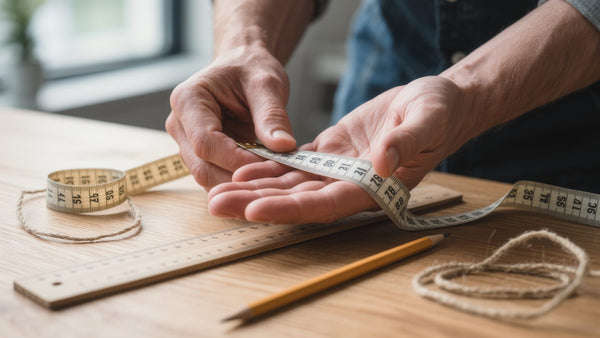
One thing worth knowing: erect girth tends to shift slightly with age. For some men it decreases modestly; for others it doesn't change significantly. If you previously owned rings and find they're a different fit than expected, measure again rather than assuming your old size still applies.
Pairing With Other Tools
For men in their 40s managing age-related changes, a ring rarely does its best work alone. The most effective approach is typically a combination:

Regular cardiovascular exercise: This is the single most evidence-supported lifestyle intervention for maintaining vascular erectile function. 30 to 40 minutes of moderate-intensity aerobic exercise four times per week has demonstrated measurable effects on erectile function in published research.
Pelvic floor exercises: The muscles that actively support venous occlusion, ischiocavernosus and bulbocavernosus, can be trained. A consistent pelvic floor exercise routine adds a structural dimension to what the ring does mechanically.
PDE5 inhibitors (with a doctor): For men whose changes are significant enough to want pharmacological support, daily low-dose tadalafil is increasingly common in this cohort. A prescribing physician or urologist can evaluate whether this makes sense for your picture. Combining daily tadalafil with a ring addresses both the arterial inflow and venous outflow dimensions of the problem simultaneously.
Testosterone evaluation: If libido is declining alongside erection quality, a testosterone panel is worth discussing with a doctor. Low-normal or clinically low testosterone has real effects and real treatment options. A ring doesn't address this; a physician does.
When It's Not Enough: See a Urologist
The tools above, exercise, ring, possibly PDE5i, are appropriate for men whose changes are gradual and manageable. There are signals that indicate a urologist evaluation is warranted rather than self-management:
- Sudden or significant change in erectile function (not gradual)
- No meaningful response to PDE5 inhibitors
- Penile pain, new curvature, or lumps
- Symptoms suggesting cardiovascular disease: chest pain, exertional dyspnea, significant hypertension
- Changes in urinary function alongside erectile changes
- Significant decline in libido alongside erectile changes (possible hormonal component)
A urologist can evaluate which of the physiological changes described above is primarily driving your experience and recommend an appropriately targeted approach.
Real Expectations
If you're in your 40s and using a ring consistently alongside the other tools mentioned:
What's realistic: Noticeably firmer erections during sessions, sustained through the encounter rather than declining mid-activity, with a natural finish. Many men in this cohort describe this as "getting back to how things used to work," not in every dimension, but in the dimension that matters most during sex.
What isn't realistic: A ring that makes your 45-year-old performance identical to your 25-year-old performance across all dimensions. The physiological changes in testosterone, refractory period, and the effort required to achieve erection don't change with a ring.
The bottom line: The 40s are the decade where a thoughtful toolkit starts making real sense. Men who combine consistent lifestyle practices with appropriate support tools generally fare considerably better than men who either ignore the changes or catastrophize them.
Frequently Asked Questions
Is it normal for erections to become less reliable in your 40s?
Yes, it's extremely common and reflects well-documented physiological changes rather than anything unusual about your situation. The degree varies significantly by individual and is strongly modulated by lifestyle factors.
Can cock rings be used long-term, or do they stop working?
The mechanical effect doesn't diminish with regular use. There's no tolerance or habituation to the physical mechanism. Men who use rings regularly continue to find them effective.
Should I see a doctor before trying a ring in my 40s?
For most healthy men in their 40s without significant medical conditions or contraindications, a ring can be tried without a prior medical consultation. If you're on anticoagulants, have cardiovascular disease, or have Peyronie's disease, check with a physician first.
Are there age-specific size considerations?
Not inherently. Sizing is based on current erect girth regardless of age. Measure when erect; use that number. Some men find their girth has shifted slightly from earlier measurements.
Does exercise genuinely make a difference to erection quality?
Yes, with consistent practice over weeks and months. Cardiovascular fitness directly affects vascular health and endothelial function. This isn't theoretical; it's consistently demonstrated in research.

Find your size · Venous leak by age · Shop the rings from $16.99
Disclaimer: This product is not intended to diagnose, treat, cure, or prevent any disease or medical condition. Consult a qualified healthcare provider with questions about any medical condition.